
Professor Steven Chien’s Scholarship Explores Legal Power, Professional Pathways, and Global Influence
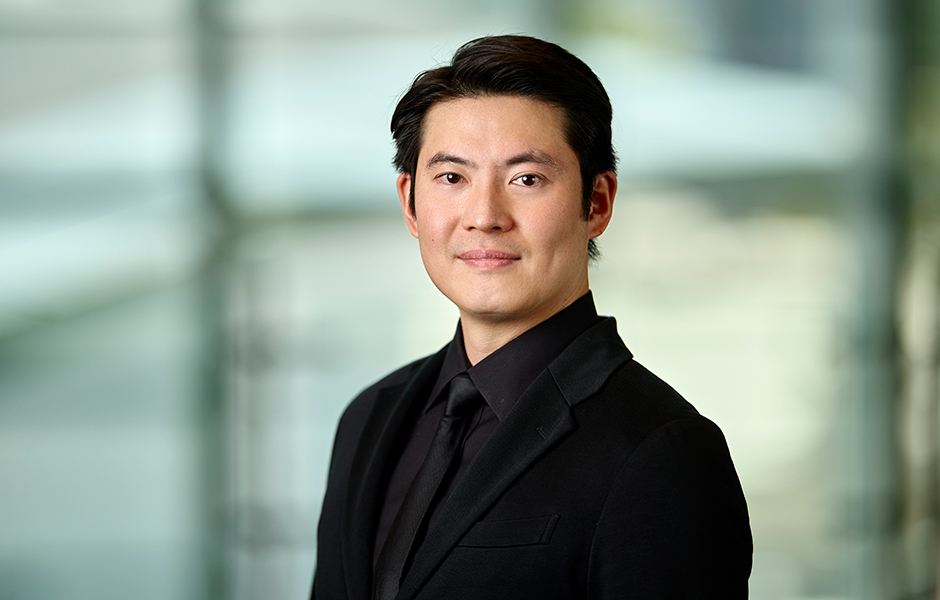
Professor Shih-Chun “Steven” Chien’s scholarship spans criminal law, criminal procedure, professional responsibility, evidence, comparative law, and empirical legal studies, with an interdisciplinary focus on how legal actors internalize norms, exercise discretion, and navigate professional identity within legal institutions. His research extends beyond prosecutors’ offices to examine elite formation in the legal profession. He explores how factors such as identity, student debt, institutional signals, and perceptions of professional “fit” shape lawyers’ career aspirations and advancement. Publishing in both English and Mandarin, Professor Chien brings sociological, historical, and comparative perspectives to questions of inequality, institutional design, and criminal justice reform worldwide.
In The Silent Influence of American Law: Prosecutors and the Transformation of Criminal Trials in Taiwan (forthcoming, Texas International Law Journal), Professor Chien investigates how American legal ideas shape foreign jurisdictions in both visible and invisible ways. While some influences—such as the global spread of Miranda warnings—are explicit, his work uncovers subtler “shadows” of American law embedded within legal systems that appear formally independent. By tracing these layered forms of influence, the article offers a nuanced account of transnational legal development and the subtle reach of U.S. legal norms.
Professor Chien’s forthcoming article, The “Bamboo Ceiling” in Law: Perceptions of Discrimination and Other Obstacles to Advancement in the Legal Profession (with Hon. Goodwin Liu and Ajay K. Mehrotra, Russell Sage Foundation Journal of the Social Sciences), examines why Asian American lawyers remain underrepresented in the highest levels of legal leadership despite strong educational attainment. Drawing on survey data, interviews, and qualitative analysis, the study challenges “model minority” assumptions and shifts attention from entry into the profession to advancement within it. By highlighting perceptions of discrimination, barriers to professional networks, and institutional culture, the research underscores how greater inclusion in senior legal roles strengthens democratic governance, institutional legitimacy, and the rule of law.