
The Right to Be Known: Dr. Jennifer Lackey Delivers 2026 Beecroft Memorial Lecture
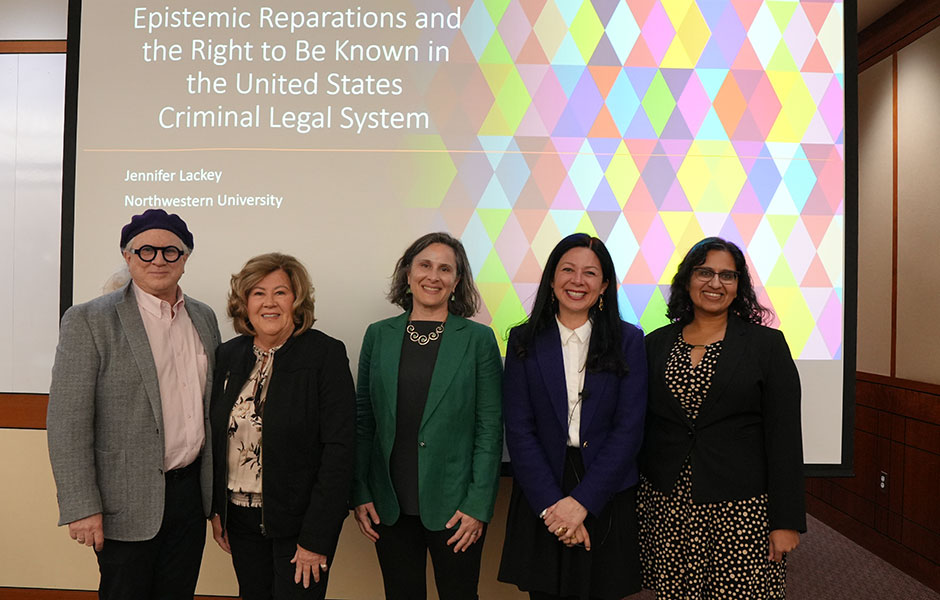
The William S. Boyd School of Law and the Saltman Center for Conflict Resolution recently hosted the 2026 Memorial Beecroft Lecture, featuring Dr. Jennifer Lackey, a renowned philosopher and legal scholar from Northwestern University. The event, held in honor of former Clark County ADR Commissioner Chris Beecroft Jr., explored the profound intersection of storytelling, justice, and what Dr. Lackey terms "epistemic reparations."
Dr. Lackey began her presentation by introducing a concept she argues is missing from the global human rights framework: The Right to Be Known. While the United Nations recognizes the "right to know" the truth about human rights violations, Dr. Lackey argues that victims also possess an inherent right to be seen, heard, and given "proper uptake" by others.
Drawing on her research into the American criminal legal system, Dr. Lackey highlighted how current structures often systematically undermine this right. She pointed to several "epistemic wrongs" that occur during the legal process:
- Rendered Invisible: When individuals are seen only as figments of imagination or surroundings rather than as persons.
- Vilification and Demonization: The replacement of a person’s actual identity with an inaccurate, demonized version.
- The Silence of Defendants: Despite the importance of narrative in trials, 97.4% of federal felony convictions are obtained through guilty pleas, leaving defendants with little opportunity to speak their truth.
Epistemic Reparations
To address these wrongs, Dr. Lackey advocated for epistemic reparations, intentionally reparative actions that aim to restore or co-produce "epistemic goods" for those who have been wronged. Unlike standard legal reparations, which are often discrete acts, Dr. Lackey argued for a process-based conception.
"Every single one of us needs to roll up our sleeves and do something," Lackey urged, "because we are all part of the process of engaging in epistemic reparations". She concluded by emphasizing that when the state promotes an "official story" that is demonizing or unrecognizable to the individual, it constitutes a fundamental theft of the "essence of someone’s life".
The lecture served as a powerful reminder for the legal and academic community at Boyd Law that justice requires more than just a fair trial. It requires the recognition of the human right to be truly known.